Whatnot break formats, explained.
Whatnot break formats are the ways a card breaker divides a break into spots and decides which cards each buyer gets. The main ones are Pick Your Team (PYT), random team, divisional, hit draft, number or serial, player and personal breaks. As of November 2026, Whatnot’s Breaks feature runs Pick Your Team breaks by auction or Buy It Now and random breaks by auction only.
By Michael at BreakerStudio · Updated
Types of card breaks on Whatnot at a glance
A break format sets two things: what a spot is, and who decides which cards each buyer gets. In every format except a personal, Whatnot requires the rules to be posted in Show Notes or the listings, and a break board only shows the outcome; it never decides it.
| Format | What a spot is | Who decides what each buyer gets |
|---|---|---|
| Pick Your Team (PYT) | One team | The buyer chooses the team |
| Random team | A place in the break; the team comes later | Whatnot’s randomizer, or a physical randomizer such as a deck of cards |
| Divisional | A division or conference of several teams | The buyer, or a randomizer, depending on how it’s sold |
| Hit draft | A draft position | The buyer picks from the hits, in draft order |
| Number or serial | A number | The buyer chooses a number or it’s assigned at random; your posted rule (such as a serial number’s last digit) decides which cards it wins |
| Player | One player | The buyer chooses, or the player is assigned at random |
| Personal | A whole pack, box or case | One buyer gets everything |
Terms you don’t know are in the card breaking glossary.
What is a Pick Your Team (PYT) break?
In a Pick Your Team break, each spot is one team, and the buyer chooses which team they buy. They get every card of that team’s players that comes out of the product (Baseball America’s guide to card breaking describes PYT and its player version, PYP). Prices vary by team, with the most sought-after teams costing the most.
- Buy It Now. The buyer takes the team they want at the price you set.
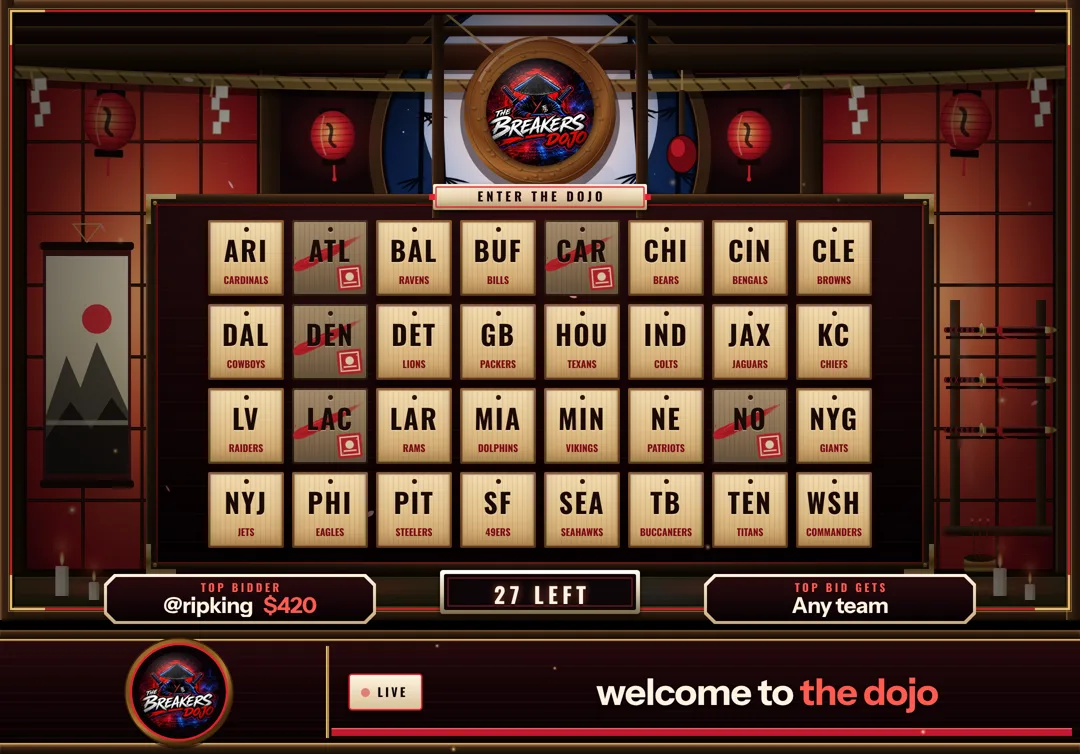
- Auction. Spots go up one at a time. “Top bid gets any team” means the winning bid chooses any open team; it describes the spot, not a bonus.
A team may not appear in the product at all. Whatnot’s Card Breaks Policy says that in team breaks every buyer must still be shipped at least one card per purchase, so say in your rules what a buyer gets when their team has no cards in the product.
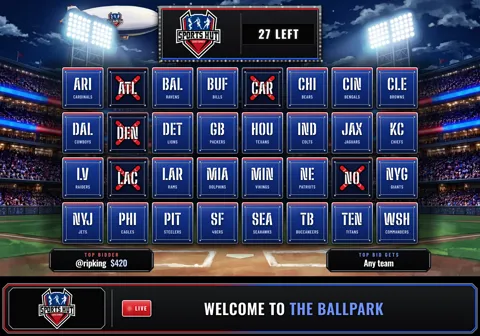
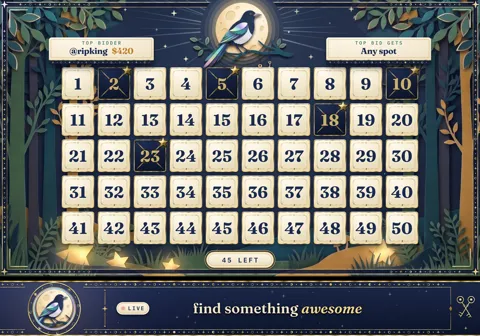
On a break board, a PYT break shows every team, with each sold team marked and the buyer’s name on it, so viewers can see what’s still open.
How a random team break works on Whatnot
In a random team break, buyers buy a spot, not a team, and the team is assigned at random. As of November 2026, Whatnot’s Breaks feature sells random breaks as auctions only, so the bidding sets each spot’s price. It gives you three ways to assign the teams:
- Auto-Randomize. Whatnot assigns a team to each buyer as soon as they win the auction.
- Randomize. With Auto-Randomize off, you tap Randomize to run Whatnot’s randomizer yourself.
- Assign Team. For a physical randomizer “like a deck of cards”, you draw on camera and enter the result.
What you can’t use is a wheel or a machine. Whatnot’s Card Breaks Policy bans randomizer wheels, “physical wheels, and digital wheels run through third-party websites and streaming software”, and machines such as a gumball machine or a raffle drum. Your break board and OBS must not pick teams either; they show the result Whatnot or your deck of cards produced. Avoid wheel-shaped graphics too, even ones that only display a decided result: the policy “applies to any use of a wheel.” The details are in Whatnot randomizer wheel rules.
Random team or Pick Your Team?
In PYT the buyer pays for certainty: they choose their team, at that team’s price. In a random team break no spot is tied to a team, so a buyer can get in without paying for a top team, but nobody knows their team until it’s assigned.
Divisional breaks and custom spot lists
A divisional break sells a division or conference as one spot, so the buyer gets the cards of every team in it. It can be sold like a PYT break, where the buyer chooses the division, or like a random break, where divisions are assigned.
Whatnot’s Breaks feature has preset spot lists, such as NBA teams, and lets you paste up to 75 custom spots per break, as of November 2026. Custom spots are how you set up divisions, conferences, players or numbers, or leave teams out. Running these from the Break Manager, with a board on stream, is covered in how Whatnot’s Breaks feature and your board work together.
What is a hit draft?
In a hit draft, buyers buy draft positions instead of teams. The product is opened, the hits (autographs, relics, numbered cards and the like) are laid out, and buyers pick from them in draft order. Your posted rules say how the order is set and what happens to the base cards.
Whatnot’s Card Breaks Policy says every buyer must receive a card, so in a hit draft you can sell only as many spots as there are cards. If the format is “one hit per spot”, count the hits the product guarantees before you set the number of spots.
Number, serial and player breaks
Not every break is sold by team.
- Number and serial breaks. Each spot is a number. In a serial break, as Baseball America describes it, one spot, often a high-priced team, is split into ten equal shares. Once all ten sell, the digits 0 to 9 are assigned at random, and each numbered card goes to the share whose digit matches the last digit of its serial number (14/99 goes to 4). On Whatnot, that random step must use an allowed method, not a wheel. Whatever a number wins has to be spelled out in your rules.
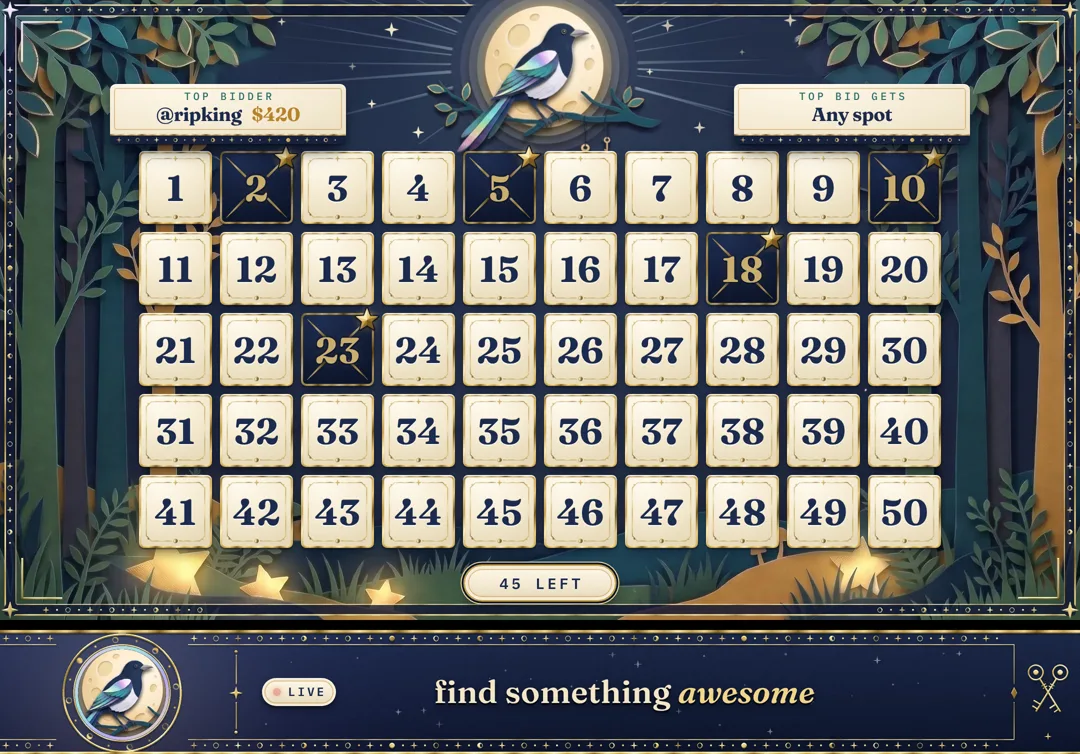
- Player breaks. Each spot is a player. The buyer chooses the player (pick your player), or the players are assigned at random through the same allowed methods as a random team break.
What is a personal break?
In a personal break, also called a personal, percy or rip-and-ship, one buyer buys a whole pack, box or case and you open it live for them. All the cards go to that buyer, so there are no spots to track. As of November 2026, Whatnot’s Card Breaks Policy says such a sale must meet its full-display rule “but is not otherwise subject to the remainder of this policy”, so the product and your hands stay in view from the sale to the last card.
Stash or Pass, Pick 2 Choose 1 and trades on Whatnot
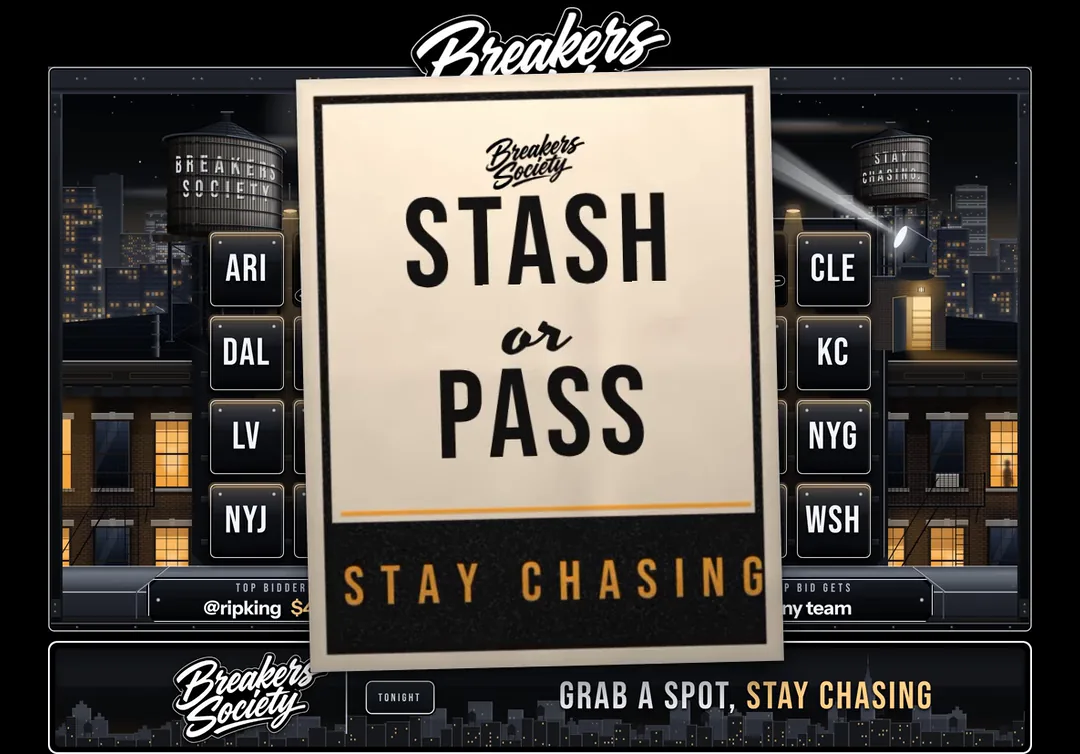
Whatnot lists Stash or Pass and Pick 2 Choose 1 as advanced formats in its Breaks feature help page; on stream they’re played as break animations. The same page explains trades. As of November 2026, Whatnot describes running each one with its own tools:
- Stash or Pass. In Stash or Pass, a buyer is given a random team and either keeps it (stash) or gives it up for a new random team (pass); your posted rules say how many passes are allowed. In Whatnot’s steps, the randomizer gives the first team; after a pass, you find the buyer’s spot in the Break Manager and tap Randomize Again.
- Pick 2 Choose 1 (also called See 2 Pick 1). In Pick 2 Choose 1, a buyer is shown two random teams and keeps one; Whatnot’s help page also mentions Pick 3 Choose 2. In Whatnot’s steps, you Randomize a first team, then Randomize Again for a second. If the buyer keeps the first, you tap Clear Team, then Assign Team.
- Trades. Two buyers swap the teams they were assigned. Clear Team on both spots, then Assign Team to each. Whatnot says to finalize any trades before you tap Start Breaking.
The animation marks the moment; the teams come from Whatnot’s randomizer or your deck of cards. A pass can’t carry a reward, either: the Card Breaks Policy bans “paid bounties, guarantees, or bonus items tied to specific outcomes or assignments.” More in break animations, and step by step in Stash or Pass, Pick 2 Choose 1 and trades in the Break Manager.
Whatnot rules for every card break
As of November 2026, Whatnot’s Card Breaks Policy (dated 22 June 2026) exempts a personal, sold whole to one buyer, from everything except the full-display rule. Every break in which a product is split among several buyers must follow these rules:
- Rules must be shared. “The rules for any Card Break run must be in Show Notes or in the item listings.” State the format, how spots are assigned and what each spot wins.
- Every buyer must receive a card. In hit drafts, only as many spots as cards; in team breaks, at least one card shipped per purchase.
- Everything stays on screen. “The full display of any Card Break must be kept onscreen from the sale of an item to the end of the Break”, including the product, tools and your hands. Multiple cameras are allowed.
- No prizes or bounties. Sellers can’t include a prize in a break, including “Prize Picks”, or paid bounties, guarantees or bonus items tied to outcomes. Whatnot’s Gambling and Purchase-Based Prize Policy gives the example of “an extra box of cards if someone gets a holographic card”.
- No wheels or machines. Randomizer wheels, physical or digital, are banned, and so are machines.
- Cards only, one show, no related buyers. No non-card items, no break spread over several shows, no off-platform pre-sales, and no participants related to the seller.
Whatnot adds: “If you are unsure whether your show complies with our Card Break policies, do not proceed with the format.” Other platforms set their own rules. The eBay Live policy bans raffles and random drawings and limits breaks to sellers it has approved. TikTok Shop’s Collectibles Requirements allow random team breaks only through its Surprise Set feature, a rule news reports date to its 31 August 2026 update (TikTok Shop Collectibles Requirements; SCCG, September 2026). More in break boards on eBay Live and other platforms.
Policy facts checked 10 November 2026: Whatnot Card Breaks Policy · Whatnot Breaks feature · Whatnot Gambling and Purchase-Based Prize Policy · eBay Live policy · SCCG on TikTok Shop Surprise Sets
Disclosure: BreakerStudio, which publishes this guide, builds custom break boards. As of November 2026, a BreakerStudio board is $799 once and yours to keep, with custom break animations, stream scenes, a control panel and a year of updates included. After the first year, updates are $99 a year and renew automatically until you turn them off; you keep your board either way. We’ll make you a free preview first.
Quick answers
What is a PYT break?
A PYT (Pick Your Team) break is a card break where each spot is one team and the buyer chooses which team they buy, getting every card of that team’s players from the product. On Whatnot, PYT breaks sell by auction or Buy It Now, and prices vary by team.
What’s the difference between a random team break and Pick Your Team?
In a Pick Your Team break the buyer chooses their team; in a random team break the buyer buys a spot and the team is assigned at random. On Whatnot, the team comes from Whatnot’s randomizer or a physical randomizer such as a deck of cards, never a wheel (Whatnot randomizer wheel rules).
What is a hit draft?
A hit draft is a card break where buyers buy draft positions and, once the product is opened, pick from the hits in draft order. Whatnot’s Card Breaks Policy says every buyer must receive a card, so a hit draft on Whatnot can sell only as many spots as there are cards.
What is a divisional break?
A divisional break is a card break where each spot is a whole division or conference, and the buyer gets the cards of every team in it. It can be sold like Pick Your Team or like a random break; on Whatnot you set the divisions up as custom spots in the Breaks feature.
Can random breaks be Buy It Now on Whatnot?
No, not through Whatnot’s Breaks feature. As of November 2026, the Breaks feature runs random breaks as auctions only, while Pick Your Team breaks can be auctions or Buy It Now.
What is Stash or Pass, and is it allowed on Whatnot?
Stash or Pass is a break format where a buyer is given a random team and keeps it (stash) or swaps it for a new random team (pass). It is allowed: as of November 2026, Whatnot’s Breaks feature help page lists it as an advanced format run with Whatnot’s randomizer. The team must come from an allowed method, not a wheel, and a pass can’t carry a bonus or bounty.
 How to use Whatnot’s Breaks feature with a break board
 What are break animations?
 Card breaking glossary